Can't We Just Build This Ourselves?

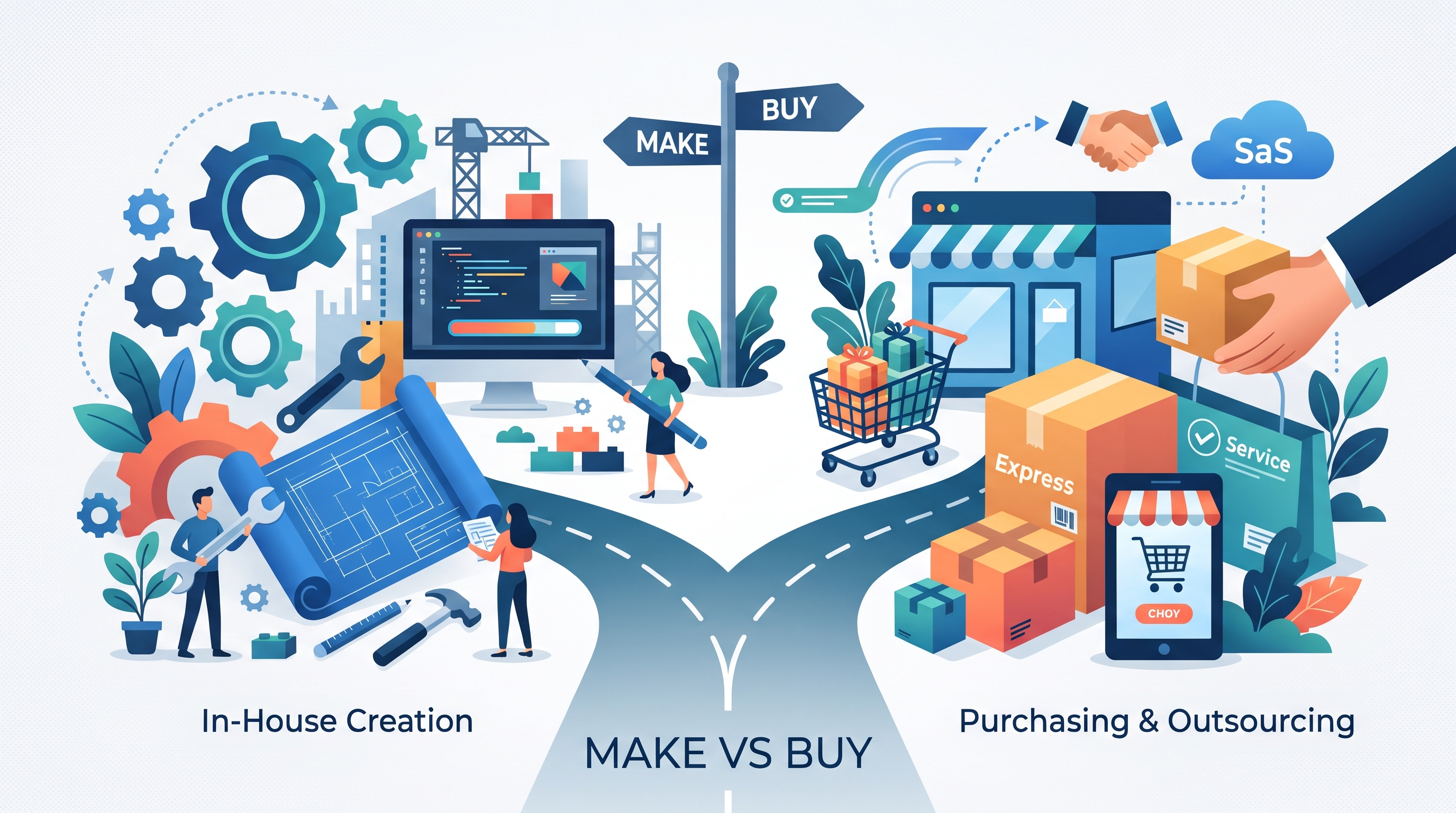
Lately we all hear the same question, in every industry and about every kind of software: "With AI, can't we just build this ourselves now?"
I admit I ask it too. I build my own tools, and I encourage my team to do the same. We suddenly have a magic wand at our fingertips that seems able to do anything we can imagine. But that is the catch: it is not magic. It is limited by our own experience and imagination.
It is a fair question. With today's coding assistants, a smart analyst can "vibe code" an app that looks like a forecasting tool over a weekend. Upload a sales history, draw a chart, run something that extends the line. It looks great on Monday morning.
I build software for a living, and I use these tools every day. They are real. But a demo answers the easy question: can we produce a number? It does not answer the hard ones:
Vibe coding removes the cost of writing code. It does not remove the cost of knowing what to build, proving it works, and keeping it alive. And when the problem needs real research, it does not get you there at all.
If you want to build decision-grade planning in house, here is the job description. You need the people and the time to:
For a global manufacturer, my estimate is a dedicated team of well over a dozen specialists: data scientists and ML engineers for the forecasting models, operations research experts for optimization, data engineers for the ERP integrations, supply chain planning experts, software engineers and a UX designer for the product, DevOps and security engineers for the cloud, a product manager to own the roadmap, and support people to keep planners working. That already counts on AI coding tools. Without them, the team would be about four times bigger. And it assumes you can hire them.
Which brings me to the battle for talent. The best AI and optimization people want to work where AI is the product. A chemical plant or a building-materials company competes for them against AI companies, and it usually loses. The team you can hire is rarely the team you need.
Every operations leader makes this call every week. In the plant it is called make-or-buy, and the rule is simple:
A carmaker does not make its own tires. It could, in theory. Tires sit right next to its core business, and it has the engineers, the factories and the buying power. But tires are a science of their own: rubber chemistry, tread design, years of testing. Tire makers do it better, cheaper and at scale. So even the biggest carmakers buy their tires.
In-house planning AI is the same story, and it fails both tests at once. Most manufacturers lack the capability (the specialists and the methods) and the capacity (their best people are already busy running the business).
So think of Hexight the way you think of those tires: a finished part, not a production line. Behind it are the machines, years of investment, and people who care about one problem: supply chain decisions. We are leading the shift to autonomous workflows, where you steer and agents do the work. You do not need to build the line. You buy what it makes and put it to work in your plant.
The classic argument for building is control: "Our business is unique. Off-the-shelf will never fit."
Ten years ago that was often true. Today, the right partner works differently. The models learn from your demand, yourlead times and your disruption history. The product adapts to your data as it is, not to a perfect master-data project that never ends.
And a good partner brings something an internal team rarely can: the view from many supply chains. We see patterns across industries, so we can show you opportunities you did not think to ask for. You get customization to your workflows and experience, without the cost of a production line you never wanted to own.
Build it yourself if you can say yes to all of these:
If not, do what you already do in the plant: make what you are built to make, and buy the rest from someone who is built to make it.
Your factory makes great products. Let it focus on that. Leave the tires to the tire makers.