Are All AI Agents the Same?

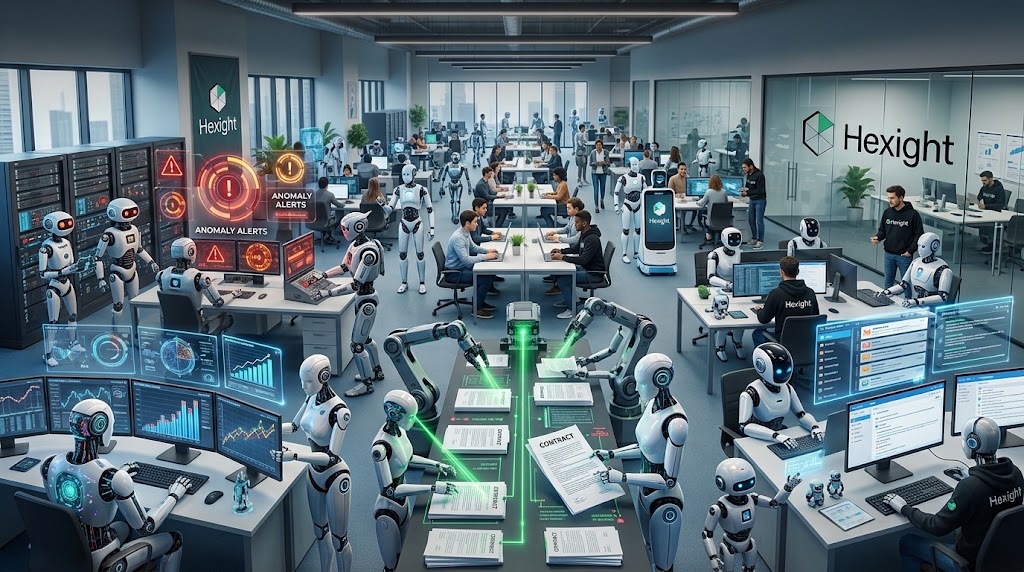
No, all agents are not the same. Some agents save time. Others make better decisions. In supply chain, most of the value is in the second kind.
Open any supply chain software site in 2026 and you will see the word "agent." The money is following. Gartner expects spending on supply chain software with agentic AI to grow from under $2 billion in 2025 to $53 billion by 2030.
Companies are already spending heavily on planning automation. Yet many supply chain leaders are not confident they can turn that spend into results. Spend alone does not create value.
Part of the problem is that "agent" now covers very different things. Some are assistants. Some run single tasks. A few make real decisions. They are not interchangeable.
So the real question is not whether to use agents. It is which kind.
The first wave is workflow and productivity agents. They search, summarize, check data, chase suppliers and flag exceptions. They deliver real value, and you should use them.
Most of today's agent projects target the work where planners spend the most manual effort:
The time savings are real. A language-model layer lets planners ask questions in plain language. Investigations that once took days across several systems can now take minutes.
These agents make specific planning tasks more efficient. That matters. But it has a ceiling.
A productivity agent makes the current process faster. It does not change the quality of the decision underneath. Automating manual tasks, or layering new tools on old workflows, rarely delivers a meaningful improvement on its own.
Look closer at how these assistants work. A language model can explain an optimization engine's output, but it does not replace the engine. The LLM explains. The optimization model decides.
The same logic applies to agents. Standard automation handles routine, rule-based tasks more cheaply and reliably. Agents earn their place where a decision depends on context.
And decision quality is where supply chains are struggling. Disruptions now come so often that most companies handle them outside their formal planning process. A monthly S&OP cycle cannot keep up.
Legacy planning systems were built for stability, not volatility. Add a chatbot to one of them and you get faster access to the same plan. You do not get a better plan.
The second wave is agents that decide. They learn from a company's real demand, supply, lead-time and disruption history. They forecast a range of outcomes, test thousands of possible futures, and pick the action that holds up best.
The perfect forecast does not exist. Leading companies no longer fight uncertainty; they use it. They break planning into thousands of small decisions and what-if scenarios to find the best options.
This is often called decision-centric planning. The core question shifts from "What process should we run?" to "What decision needs to be made?" Specialist agents do the analysis: demand agents forecast, inventory agents simulate buffers, and finance agents weigh margin against working capital.
Real-world data is what makes these agents trustworthy. Agents inherit every error in the data they read. Inputs that ignore real operating constraints produce decisions with no grounding in reality. A general model knows language. A decision agent has to know your lead times, your suppliers and how your demand swings.
The biggest gains come from better decisions, not from finishing tasks faster. Single agents improve single activities. Agents working together across the workflow lay the foundation for autonomous planning.
The upside is large:
We see this in practice. A global chemical company in its first year with Hexight saw forecast accuracy rise 30% across its portfolio. Excess inventory on high-cost products fell 60% with no missed sales. The team also captured a $5M revenue surge that its legacy systems missed.
Start with high-frequency decisions, and scale automation by decision value. Ask any vendor selling you an agent these six questions:
Workflow agents are the interface. Decision agents are the engine.
The two fit together: the language model explains, the optimizer decides. The strongest setup is decision agents trained on your real supply chain data, with a natural-language layer on top so planners can question them.
Productivity agents save hours. Decision agents change outcomes. With volatility rising and experienced planners leaving, outcomes are what matter.
See what decision agents find in your data. Send Hexight one data file. We back-test on your own history and show the results in days, before you sign anything.